NYT Top Stories - Latest Updates
Supreme Court Blocks Trump Administration Plan to Screen Mail-In Ballots
Trump’s Effort to Assert Control Over Elections Continues Despite Supreme Court Loss
Trump Administration Moves to Integrate A.I. Into Medical Care Despite Concerns
Trump Rejects Talk of A.I. Regulation and Calls Out Anthropic’s CEO
BBC World News - Latest Updates
Trump says AI safety fears a 'hoax' as he rejects calls for greater safeguards
Welsh actor Matthew Rhys makes Emmy Awards history with double win
Nato jets down drone that entered Lithuanian airspace
US confirms for first time it has deployed space weapons
NPR National - Latest Updates
Emmys 2026: Here's the list of winners
 and The Beast in Me.'/>
The Pitt and Widow's Bay took home the top prizes in television at the Emmy Awards on Monday night. And actor Matthew Rhys became the first person to win in two lead acting categories in one night.
(Image credit: Amy Sussman)

The Supreme Court rejects Trump's mail voting restrictions for this year's midterms
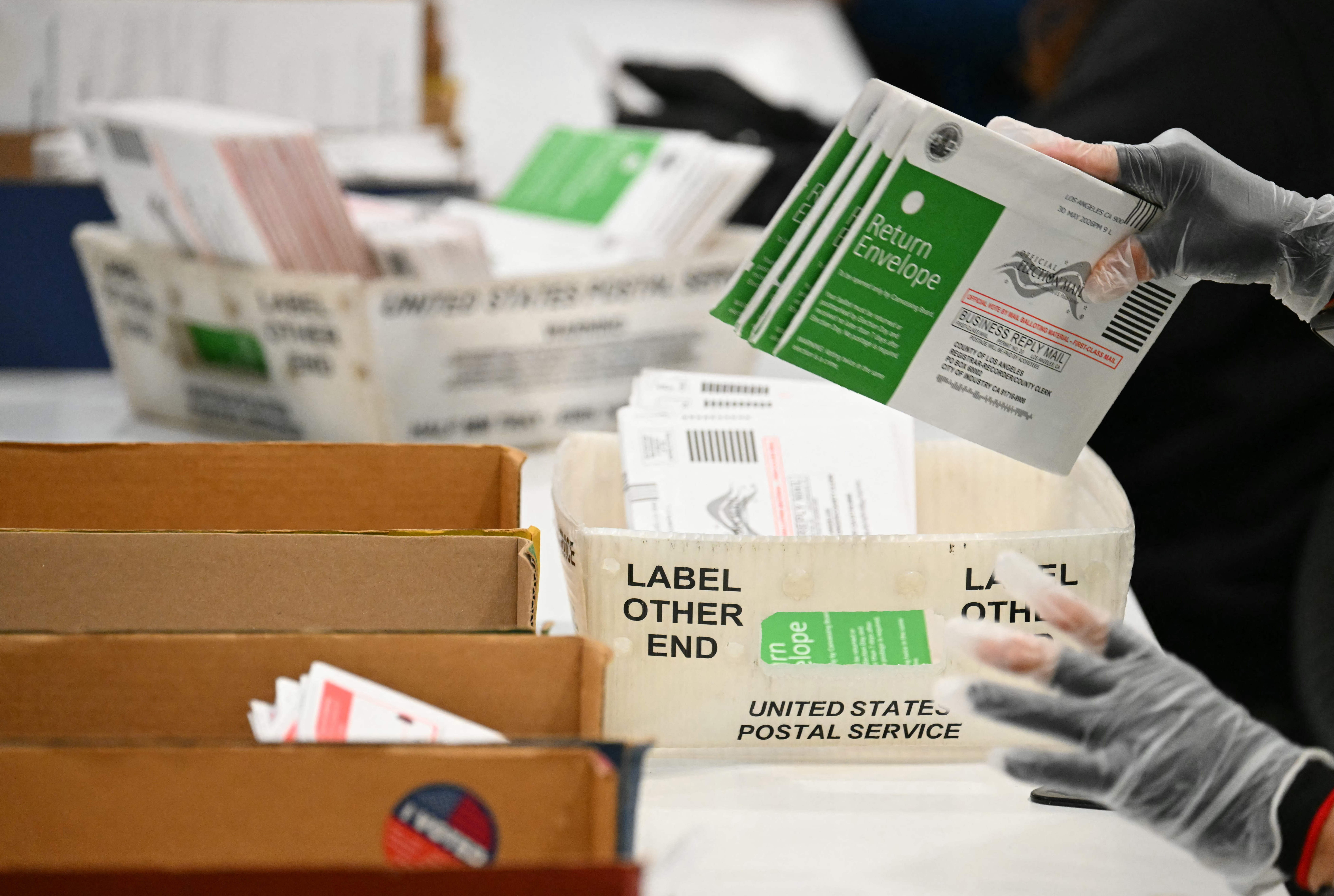
The Supreme Court has rejected the Trump administration's request to allow mail-in voting restrictions under a U.S. Postal Service plan for the midterm general election.
(Image credit: Patrick T. Fallon)

Mitch McConnell returns to Senate after fall that led to an extended medical absence

McConnell spent weeks in recovery before explaining he was "briefly unconscious" following the fall that sent him to the hospital and a weeks-long recovery process.
(Image credit: Finn Gomez)

Federal agents may have broken state laws in voter fraud hunt, whistleblower claims
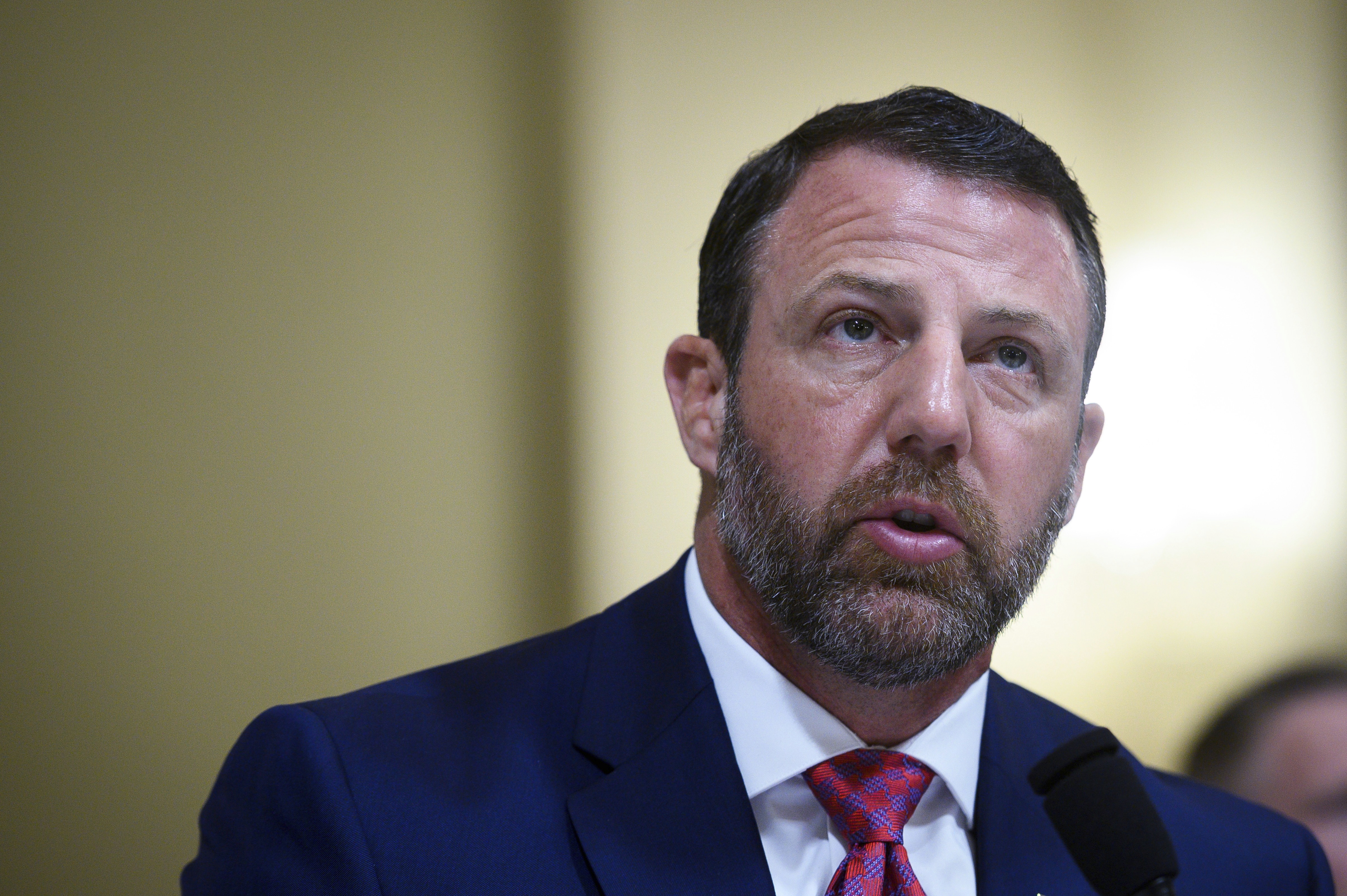
Federal agents may have broken state laws after the Department of Homeland Security began surging personnel for what it called the Unlawful Voter Initiative, a federal whistleblower alleges.
(Image credit: Cliff Owen)

Wired - Latest Updates
The Supreme Court Just Blocked Trump’s Efforts to Control Mail-In Voting for the Midterms
The Top New Features in Apple’s iOS 27 and iPadOS 27
New York Seizes a Dozen Celebrity Deepfake Websites
The Best Air Purifier of 2026: Tested Picks for Every Room
NASA Breaking News - Latest Updates
APOD: 2026 September 15 – A Daytime Eclipse: Moon Occults Venus
APOD
Astronomy Picture of the Day
Discover the cosmos! Each day a different image or photograph of our fascinating universe is featured, along with a brief explanation written by a professional astronomer.
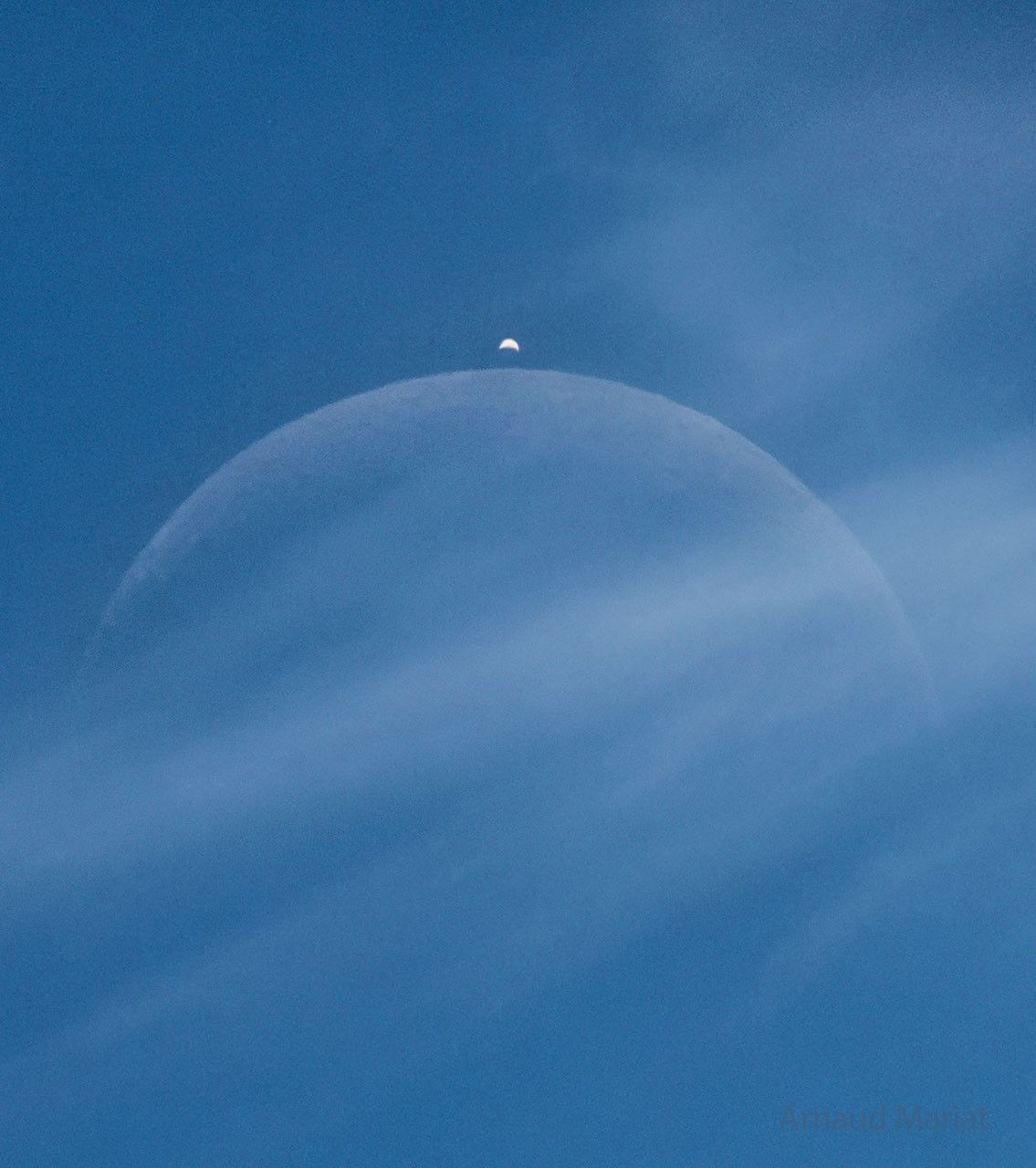
A Daytime Eclipse: Moon Occults Venus
There was something behind the clouds. Upon close inspection, it was the Moon, which was hard to see yesterday around noon above the small village of Cessy, France. But soon, it was not only the Moon. As expected, a bright dot suddenly appeared from behind the Moon — the planet Venus far in the distance. Captured in the single featured exposure, both appeared to show a crescent phase. The Moon’s crescent was quite slight — with only about 10 percent of its face illuminated by the Sun. In contrast, Venus’s crescent was more full — showing about 25 percent illumination. Venus appeared brighter because it is nearer the Sun and because its clouds are more reflective than the dark lunar surface. An occultation of Venus by the Moon is visible to only about 10 percent of the Earth, but in yesterday’s event even most of that was experiencing daytime.

APOD’s main NASA site is moving: From apod.nasa.gov to science.nasa.gov/apod
Tomorrow’s picture: galactic eye
| Date | September 15, 2026 |
|---|---|
| Credit & Copyright | Arnaud Mariat |
| Authors & editors: | Robert Nemiroff, Jerry Bonnell, Cecilia Chirenti, Keighley Rockcliffe |
| A service of: |
ASD at NASA / GSFC, NASA Science Activation & Michigan Tech. U. |
Webinar 9/23: NASA CSDA Program Update 2026
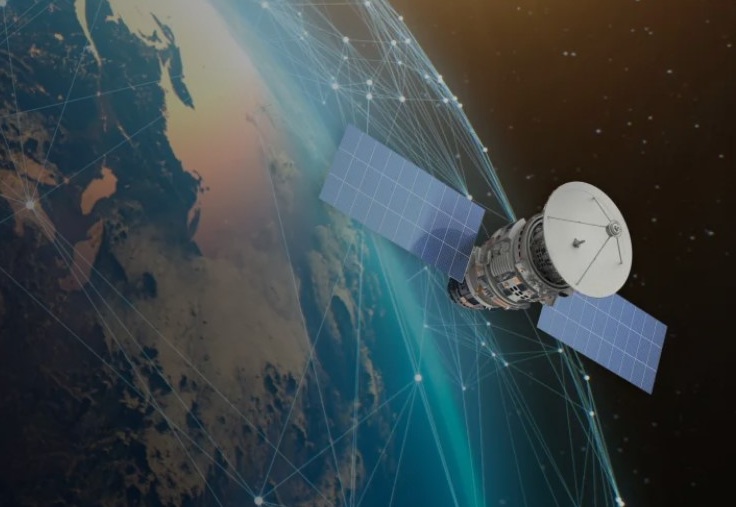
NASA’s Commercial Satellite Data Acquisition Program is a science‑enabling program that provides licensed access to high‑quality commercial Earth observation data, strengthens data quality through calibration/validation (cal/val) partnerships and transparent evaluations, and funds the development of science and application use cases to help turn commercial data into actionable research and applied solutions.
The program augments NASA’s gold standard fleet of freely and openly available Earth observing satellite observations and data products with high-resolution, high-frequency, and taskable commercial datasets.
During this webinar, speakers will provide an overview of the CSDA program’s activities and progress. Topics will include data modalities available through the program, updates to the evaluation process, the new cal/val initiative, and the status of existing task orders with CSDA data providers. In addition, presenters will cover the types of end-user licensing agreements, data availability and access, new data archive and tasking capabilities available through the Satellite Data Explorer, user engagement opportunities, and new learning resources.
New Crops, Health Research Proposals to Help NASA Advance Exploration
NASA has selected 12 new investigations to help support human explorers in space. Six will help advance the ability to produce food off-planet, while another six advance the understanding of how unique conditions associated with space exploration can impact the health and physiology of astronauts.
The six food-focused investigations, supported by the agency’s Space Crops grants, advance NASA’s goal of harnessing the power of plants to enhance quality of life for humans in space, as well as to enable lunar and Mars exploration. Four of the space crops proposals focus on studies of edible plants and how their growth, physiology, and associated microbial communities are affected by environmental conditions in space or on other planetary bodies.
Another proposal involves understanding mechanisms by which certain plant species, called resurrection plants, can withstand extreme, dry conditions. The last space crops proposal builds on previous studies on the International Space Station to uncover functions of algal genes, segments of DNA controlling algae survival, whose expression is modified by spaceflight. Such studies can help scientists integrate biological-based solutions into space life-support systems.
The second set of six proposals fall under the agency’s Biological and Physical Sciences Division’s focus on precision health, which seeks to unravel the mechanisms by which space exploration affects health and well-being. One proposal studies how lunar dust exposure impacts respiratory, immune, and inflammation responses. A second proposal identifies repurposed drugs that can mitigate the effects space travel has on health and physiology.
Two more of the research proposals look at how radiation combined with other stressors affects age-relevant characteristics seen in various organ and physiological systems. The final two proposals assess molecular and cellular changes induced by stressors in space that can alter gene expression or protein function. The research will identify ways to mitigate health issues and develop early-warning detection systems to notify crew of potential concerns.
The principal investigators who conduct the space biology studies come from 10 institutions across eight states. Nine of the awards are for investigators who are receiving funding from the Space Biology Program for the first time.
Selected Space Crops Investigations
- Jannell Bazurto, University of Minnesota
Cultivating the Cosmos: Investigating Plant-Microbe Dynamics for Sustainable Space Farming - Miranda Haus, Michigan State University
Investigating Legume Crop Rotations and Microbial Interactions in Regolith Simulants - Andrew Settles, NASA Ames Research Center
Genetic Mitigation of Spaceflight Stressors on Production of Chlamydomonas - Christopher Taylor, Ohio State University
Hydroponic Microbes in a Low Carbon, High-Radiation Environment; Identifying the Genetic Determinants of Water- and Plant-Associated Microbial Survival in Extraterrestrial Environments - Robert VanBuren, Michigan State University
Leveraging the Natural Resilience of Resurrection Plants for Space Bioregenerative Systems - Shuyang Zhen, Texas A&M AgriLife Research
Environmental Optimization and Cultivar Selection to Enhance Dwarf Tomato Growth and Stress Tolerance for Space Agriculture
Selected Precision Health Investigations
- Archana Dhasarathy, University of North Dakota
Epigenetic Memory as an Adaptive Mechanism to Microgravity and Radiation Exposure - Andrij Holian, University of Montana
Contribution of Aging to Particle-Induced Chronic Inflammation - Mert Gur, University of Pittsburgh
Probing Pathogenic Mutations Under Spaceflight-Relevant Stressors Via All-Atom Molecular Dynamics Simulations - Grace O’Connell, University of California
Persistent Spine Health Impacts of Microgravity and Radiation Following Recovery - Satoshi Okawa, University of Pittsburgh
Investigating Space Flight-Induced Brain-Heart Axis Aging and Identifying Repurposed Drugs to Mitigate Its Effects - Sanghee Yun, Ph.D., The Children’s Hospital of Philadelphia
Spaceflight-Relevant Hypercapnia Effects on Space Radiation- and Social Isolation-Induced Biological Aging: A Systems Biology Analysis of Multiple Aging Hallmarks
When fully implemented, more than $7 million in grant money will be awarded throughout fiscal years 2026-2030. These awards were made in response to research proposals submitted to ROSES-2024: Program Element E.9: Space Biology Research Studies (NNH24ZDA001N-SBR).
To learn more about NASA’s biological and physical research in space, visit: https://science.nasa.gov/biological-physical/
Biological & Physical Sciences Division
-
NASA’s Biological and Physical Sciences Division pioneers scientific discovery and enables exploration by using space environments to conduct investigations not possible on Earth. Studying biological and physical phenomenon under extreme conditions allows researchers to advance the fundamental scientific knowledge required to go farther and stay longer in space, while also benefitting life on Earth.
NASA Welcomes Djibouti as Newest Artemis Accords Signatory
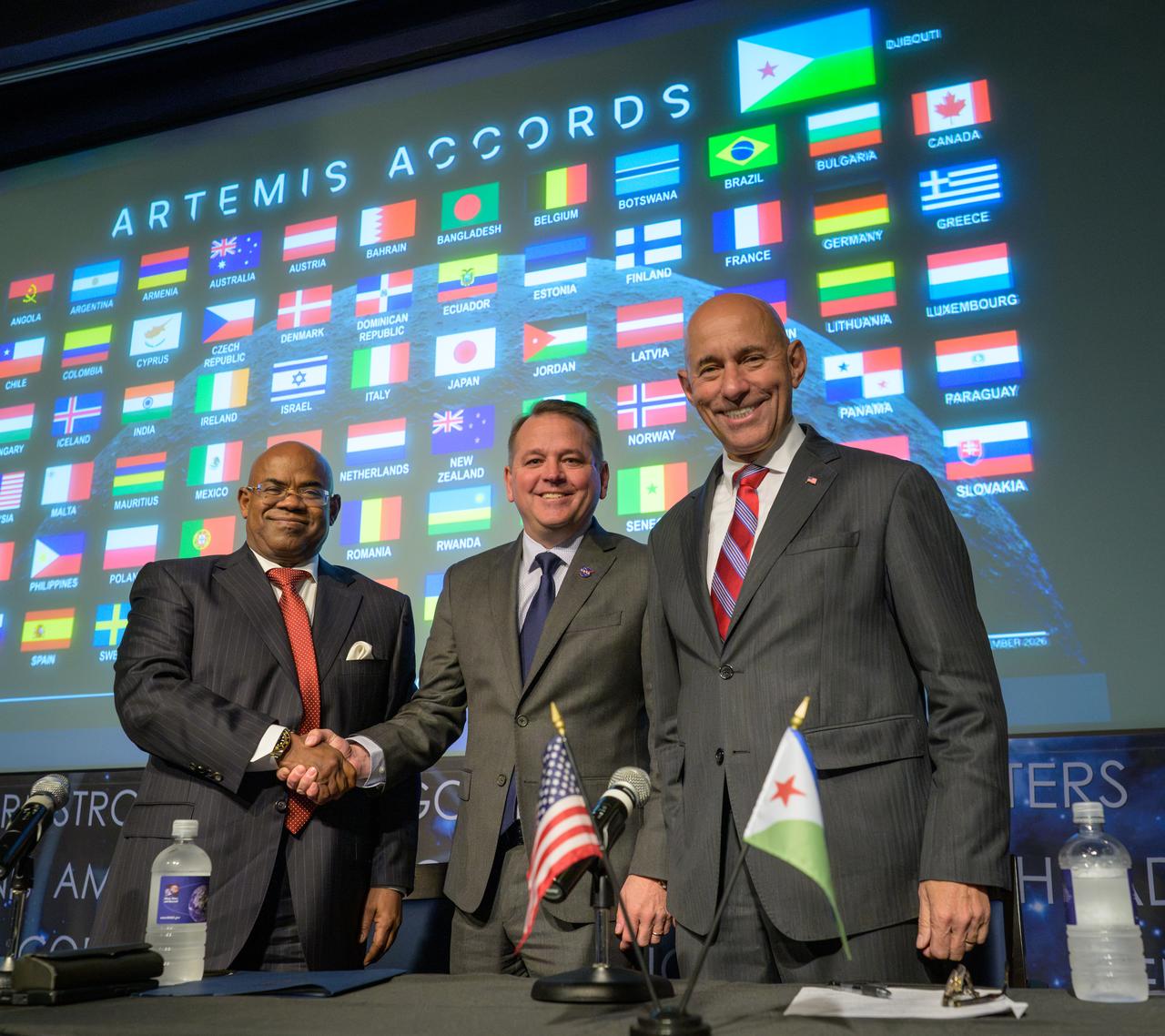
The Republic of Djibouti became the 72nd nation and eighth African country to sign the Artemis Accords during a ceremony Monday at NASA Headquarters in Washington. The Artemis Accords are the first set of practical principles aimed at enhancing transparency, safety, and coordination among nations as they explore the Moon, Mars, and beyond.
“Djibouti joins this coalition of like-minded nations at an important time,” said NASA Deputy Administrator Matt Anderson, who hosted the ceremony. “President Trump has directed NASA to return Americans to the lunar surface, establish an enduring presence, and lay the foundation for human exploration of Mars. NASA will lead, but we will not do it alone. We are creating opportunities for Artemis Accords nations to contribute hardware, scientific payloads, technology demonstrations, CubeSats, and other capabilities to future missions.”
Ambassador of Djibouti to the United States Mohamed Siad Douale signed on behalf of Djibouti. U.S. State Department Assistant Secretary for African Affairs Frank Garcia also participated in the event.
Djibouti’s national space program, launched in 2020 and managed by the Centre for Studies and Research of Djibouti within the Ministry of Higher Education and Research, has steadily expanded its technical capabilities. The nation successfully launched its first satellites, Djibouti 1A and Djibouti 1B, in 2023 and 2024, respectively. Both reached orbit aboard American Falcon 9 rockets launched from Vandenberg Space Force Base in California, an early example of how the U.S. is supporting Djibouti capabilities in space.
“By joining the Artemis Accords, Djibouti seeks to deepen its partnership with the United States and with the growing community of nations committed to peaceful space cooperation,” said Douale. “We look forward to building partnerships in scientific research, satellite applications, education, and technical training, while creating new opportunities for Djibouti students, researchers, engineers, and entrepreneurs.”
In 2020, NASA and the State Department joined with seven other founding nations to establish the Artemis Accords, responding to the growing interest in lunar activities by both governments and private companies, and committing nations to:
- Explore peaceably and transparently
- Render aid to those in need
- Enable access to scientific data
- Ensure activities do not interfere with those of others
- Preserve historically significant sites and artifacts by developing best practices
By signing the Artemis Accords, nations open the door to opportunities for future lunar exploration with NASA, advancing humanity’s return to the Moon, and shaping the Golden Age of space exploration and innovation.
Learn more about the Artemis Accords at:
https://www.nasa.gov/artemis-accords
-end-